



Well race season is almost here. Motogp is two rounds in. WSBK is one round in and MotoAmerica had the classic Daytona 200 a couple of weeks ago now.

With the 200 recently run I have to mention the history that Kayla Yaakov made with an incredible podium in that historic race. Some of the names of previous podium finishers are Miguel Duhamel, Carl Fogarty and Eddie Lawson. World champions and AMA legends. A truly amazing result and it got me thinking how do we get more women to make history like Kayla Yaakov just did? Or follow me into the CSBK series and get a chance to finish on a national podium.
So with that being said, this blog is going to be about how we can get more women in racing and I don’t think it’s an easy answer, but I believe it’s possible.
For some racing starts for them when they are children. That’s not how it started for me, as I didn’t ride a motorcycle until I was 23! I’m sure there are quite a few young girls who are doing minibike racing right now. That is a great place to start as most world champions and the fastest riders in Canada started on minis. With the Ohvale brand coming in to Canada and minibike tracks across the country, I’m sure there will be younger girls joining the ranks in the next 5-10 years or so.
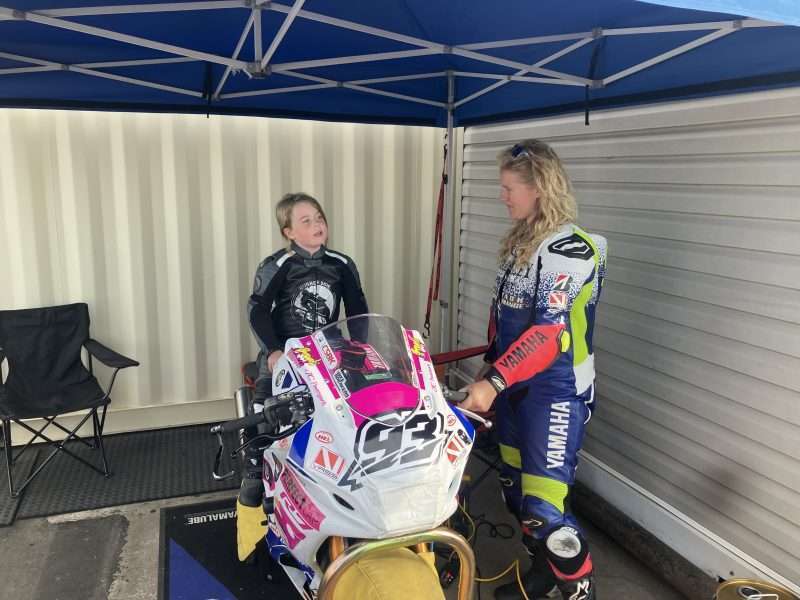

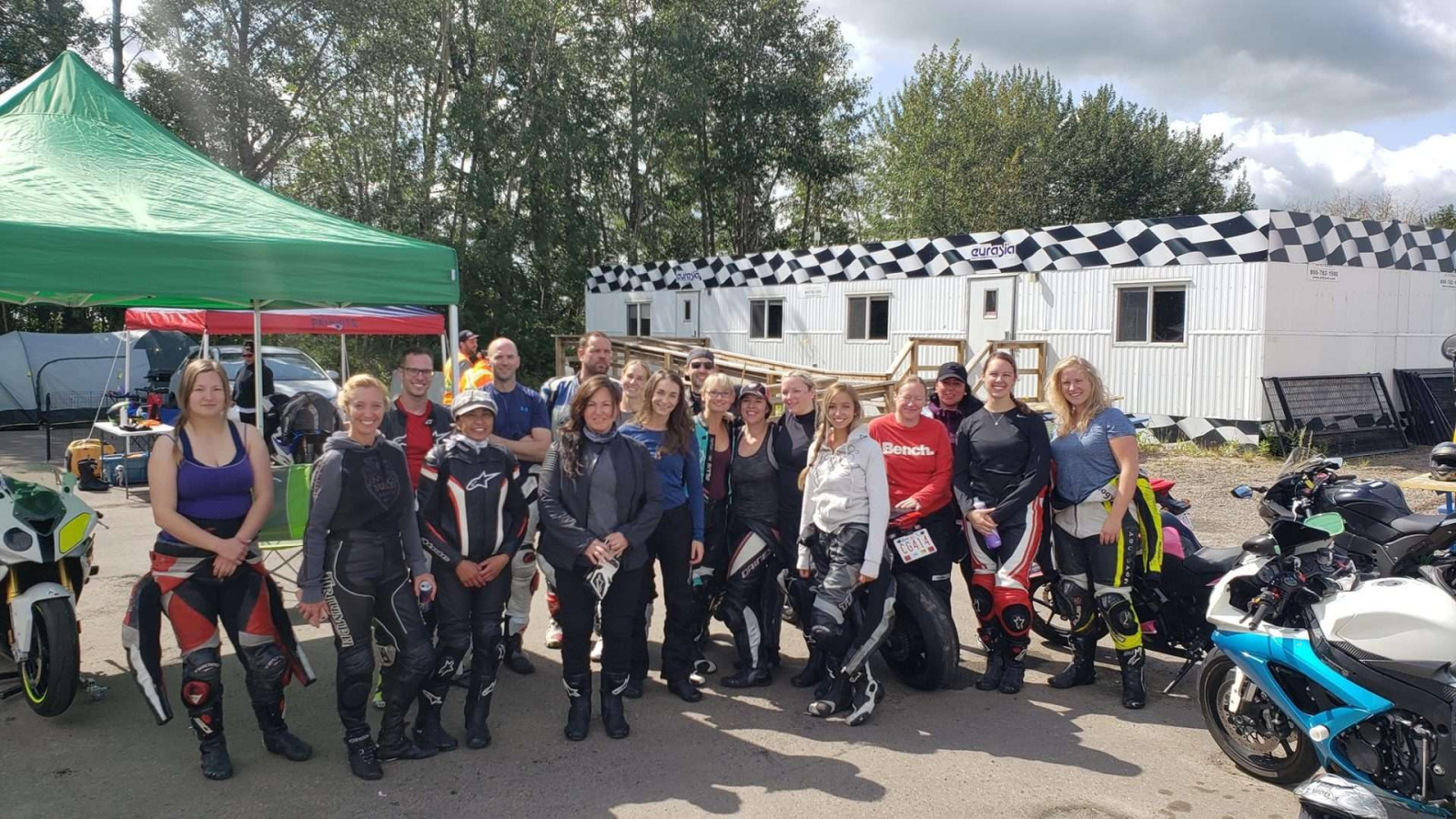
But let’s talk about right now. Everyone in Spain and Italy start racing when they are children; the same as hockey starts so young in Canada, their model is much like the minor hockey organizations but with motorcycles. That being said that doesn’t help us in the next couple of years, so I’ll focus on a little shorter term. That brings us to track days and riding schools. If track days and riding schools are any indication, we should have way more women racers than we currently do.
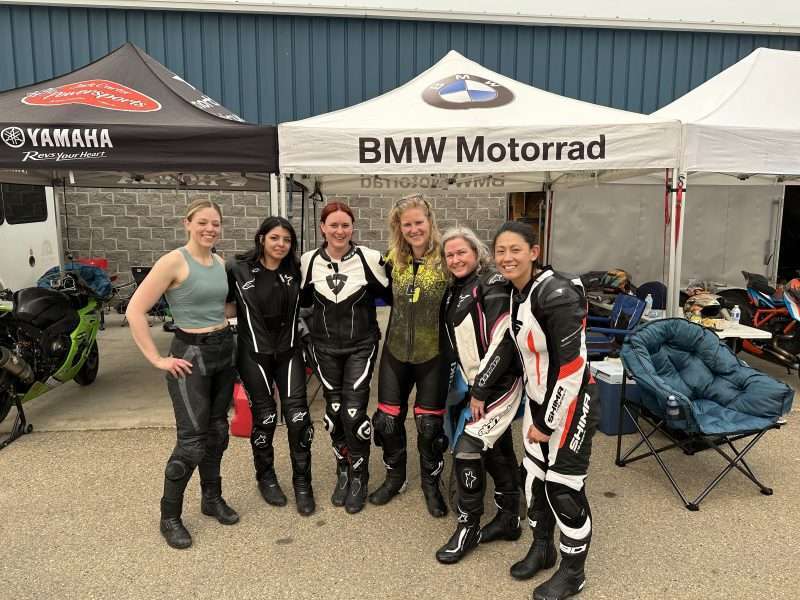
When I started racing in 2017 with the EMRA they had a Women’s class with 4 to 5 racers consistently on the grid. In the last 10 years or so, the number of participants has stayed around that number. Why is that, with the numbers increasing at track days and riding schools which I have seen with my own eyes? I think it partially comes down to the difference between women and men and how they are wired.
Now that track days are so readily available and accessible the number of male novice racers has increased a bit, but not as much as you would expect with how many people do track days. Is this a difference between the racing mentality and the track day mentality? I think the mentality that is required to go racing is a huge factor for why anyone goes racing. After watching my very first race, I couldn’t wait to go racing! I knew I needed to do it and there was no plan to ease into it by doing more track days. I did one race school and then I went racing.
Like I’ve always said before, racing is about commitment. Mentally, physically and financially racing demands full commitment. It demands all of you. You’re either in or you’re out. For the average track day person, they get their kicks, ride fast and have some fun, but there is no pressure. Virtually all clubs have a Women’s class and a Novice class and there is even a Women’s World Championship for racing. Which I believe has a place in racing.
I just wanted to compete. I like competing with the fastest racers and that is with the men. It’s not like the old days, the paddock is very welcoming to women now. Everyone wants to help; the guys I started out with there was no animosity. I was just another racer to them. From some of the older school guys here and there I would get some “don’t get beat by a girl” mentality, but no big deal.
So how do we get more women in racing? I think the only way is for women who are currently racing to show other women that it can be done. This is one of the few sports in the world that when we all line up, a man’s natural physical advantage is not as great. The playing field is more level and I love that.
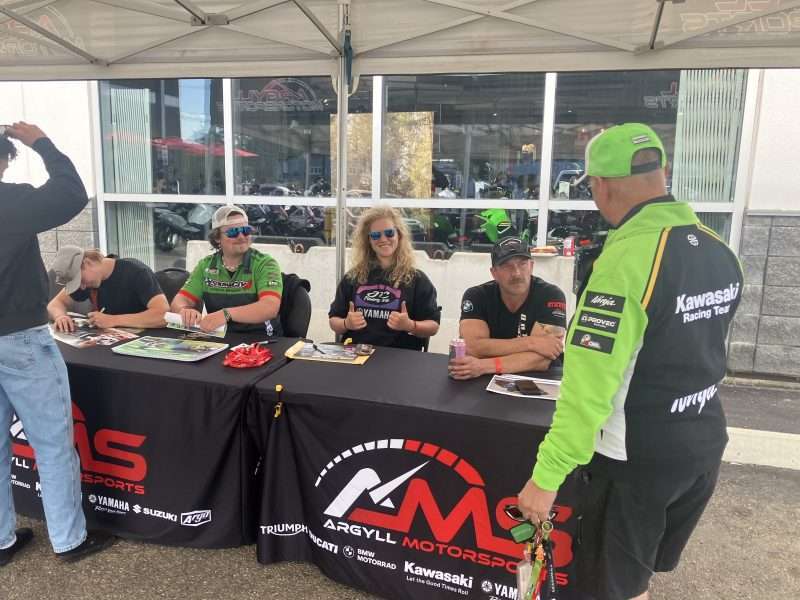
When I started racing my racing hero was and still is Ana Carrasco. First Women’s World Champion racing against all men in one of the most aggressive classes in the world WSSP 300. When I started racing, I wanted to do a version of what she did, it just motivated me to push. So, Kayla’s historic podium will hopefully inspire other women to do that as well!
Some other legend woman racers are Kathleen Coburn, Melissa Paris, Jenny Tinmouth, Laia Sanz, Toni Sharpless, Maria Costello and the fast woman racers currently competing in the WCR. These great female racers have had careers I dream of having, and I aspire to go as far as possible with my riding career. There are also some local legends who came before me Tricia WallReese and Lorna Stelmack! Also, a shout out to the current woman racers in the EMRA who are pushing to take another step. I hope that some of my racing and results inspires girls and women to get into the sport.
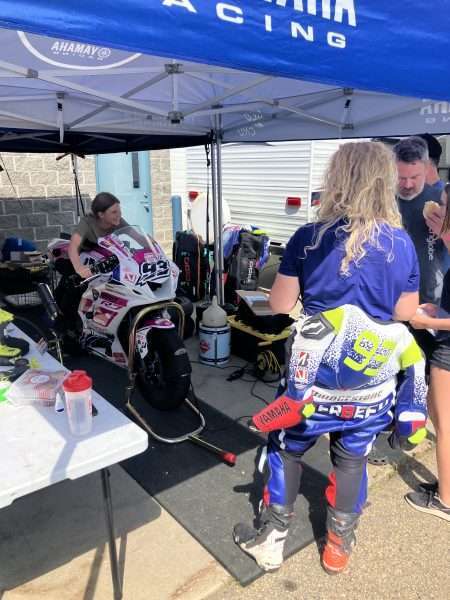
So it’s not about the money; well okay, it’s always a part of racing. It’s not about track time; there has never been more track days/schools available ever. It’s not about getting help at the track; my experience with men and track day people go out of their way to make it welcoming to us. It’s not about the bikes; the modern manufacturers make great bikes that work for racing and work for smaller female riders. It’s about showing women that we can compete with the men and do very, very well! Women can win and be very fast! It’s about getting out there and doing it! So, until the next wave of young girls racing their minis against the boys get here, it will be us ladies showing the next group that we belong.
Any women riders who read this, please feel free to message me and ask any questions about how to get to the track or how to go racing! I’ve been lucky to have some amazing mentors / coaches and sponsors and I will help as best I can.
The best racers sometimes wear pink. Girl power!


Discussion about this post