




Whenever I watch motorsports event on video – that is often – I wonder how history will look back on the event, certainly on the key, last moments of the final lap. Battles to the wire are what make journalists and video crews love their jobs, and of course a great race is the easiest events to cover.
On the flip side, sometimes the race winner builds a useful edge – in some series, that could be as little as two seconds – and then cruises out of the last turn, standing on the pegs, maybe cutting to the pit wall to get close to their waving crew. This move, while highly emotional, means that the Margin of Victory (M.O.V.) that is recorded for that event is much closer than it should be, and does not reflect the actual situation up front, late in the race.
Of course, coverage on the day will reflect the fight at the front and indicate that second and third were well back until the final moments. But a few years later, a quick review of the records will suggest a very close race, even though that is not what viewers at the time – fans and media – remember.
The closest margin of victory in the history of MotoGP would be Portugal back in 2006, when Toni Elias on his Fortuna Honda edged the Camel Yamaha of Valentino Rossi by just .002 of a second. (Remember the days of Tobacco advertising?)

I was at that round 16 of the championship at Estoril, and my strongest memory involves the third-place finisher, Kenny Roberts Jr. The former World Champ with Suzuki was then leader of his father’s Honda powered squad and came close to earning a historic and popular success for his family.
An on-form Roberts Jr. set the fastest lap but was pushed aside late in the race by the aggressive tandem of Elias and Rossi. These events were an important preview for the pending final event in Valencia, where American Nicky Hayden (knocked down by his teammate in Portugal) would earn an emotional World Championship title. Rossi was expected to take another crown but shockingly fell mid-race in the decider.
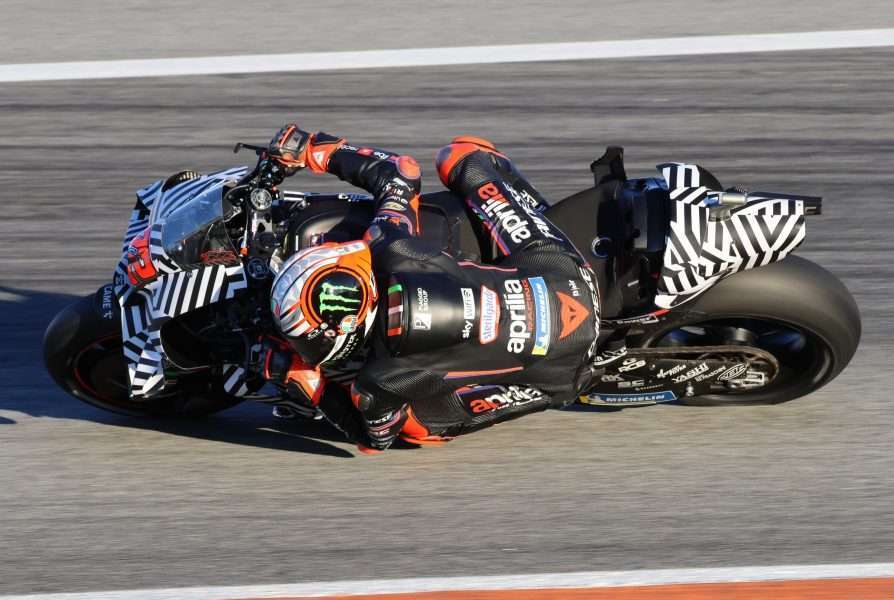
So, Estoril 2006 is in the record books as the closest finish while also provided a really exciting race. Recently, the closest finish (M.O.V.) in 2025 was at Misano for the San Marino round, when Lenovo Ducati’s eventual world Champ Marc Marquez shook off a Saturday Sprint fall to take the lead from the works Aprilia of Marco Bezzecchi mid-race. The pair traded fastest laps before Marquez won by just .568 of a second – the closest feature class M.O.V. of last season.
So, again, good race with a representative close finish.
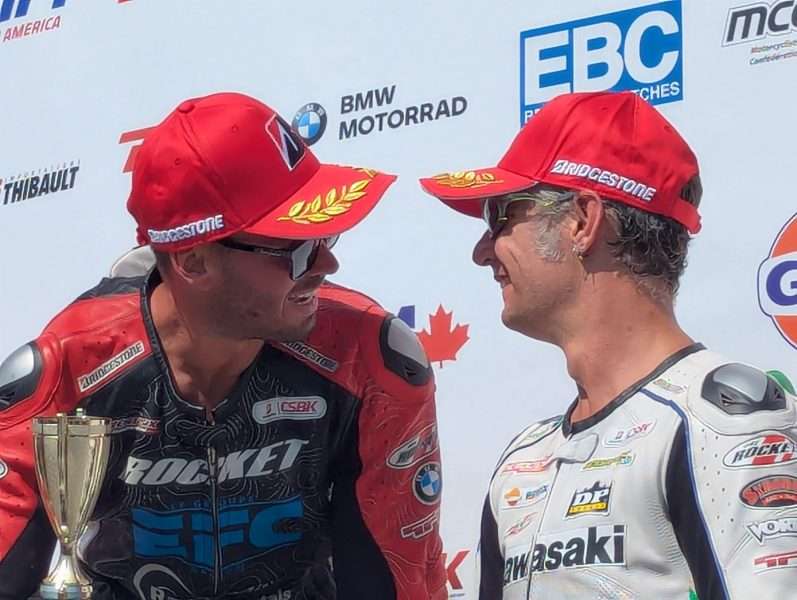
Closer to home, the final Bridgestone CSBK national feature race of 2025 at Canadian Tire Motorsport Park was one of the most exciting in series history. Jordan Szoke (Kawasaki), Ben Young (Honda) and Samuel Guerin (BMW) fought for the lead in a Red Flag shortened race, as part one crasher Alex Dumas (BMW) charged from the pit lane.
The Bridgestone CSBK national series has been blessed with many close finishes, and at the end of the most recent ten laps Young edged Szoke by .411 of a second. However, last season’s stand out racer, Guerin, fell with two turns to go, trying to pass for the lead on the outside of the daunting turn eight. Meanwhile, Dumas went from last to third, making the podium thanks to the drama surrounding all-out Guerin.
A deep dive shows that, as you would expect for a fight for first, both victor Young and Canadian GOAT Szoke turned their best laps on their last tour: Young at 1:21.22 and Szoke an oh-so-close 1:21.38. But Guerin turned the fastest lap overall on his sixth lap, a 1:21.20 – what might his last lap time have been?
In the history of the CSBK tour, series Media Manager Cam Bickle tells us that the closest ever finish was in a Middleweight Pro Sport Bike (now named Super Sport) class race in 2022 at Grand Bend. This is not s shock, since Grand Bend has produced more that it’s fair share of close racing, and this class has a strong history of fights at the front.
In this case, the battle for the win was between the Kawasaki of (then) local hero David McKay and the well-travelled Yamaha of COVID-era Champ Will Hornblower. The M.O.V. was all of .017 of a second, yielding a first win for McKay, an eventual class National Champ. The result was all the more impressive given both had crashed out of the National the day before, chasing victor Trevor Dion – another Grand Bend fast guy and eventual Middleweight Champ.
The next closest Canadian finish is maybe the most significant, since it involved three top Pro Superbike competitors, once again at C.T.M.P., this time in 2019. After a fraught drafting battle up the long Mario Andretti back straight, Kawasaki’s Kenny Riedmann outdueled (out fumbled?) BMW’s Samuel Trepeanier and Kawasaki’s Szoke.
Last lap antics were by then well established at the “old Mosport,” Suzuki’s Alex Welsh most famously coming out on top when Kevn Lacombe and Szoke got into it in the final turn back in 2012, the top three lucky that no one fell in the final turn. This was the first career Superbike success for Welsh, now an executive with BMW Motorrad.
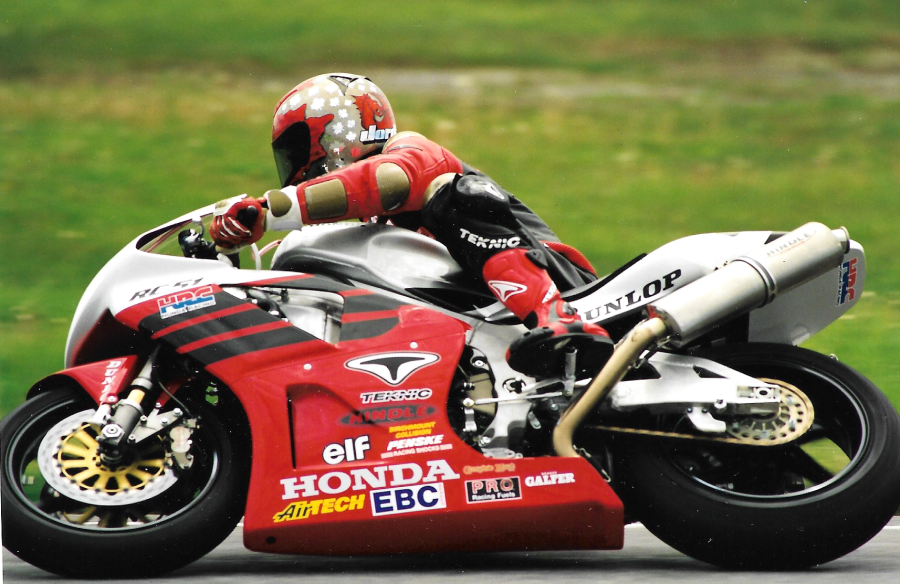
CSBK adopted electronic timing back in 2000, a huge step forced by Honda Canada, who required solid data to support their bold gamble to buy the latest works RC51 v-twins from Japan for Szoke and new recruit Steve Crevier.
Prior to 2000, hand timing yielded all the CSBK data, and a dedicated team of hand timers produced acuate information. I remember when we decided to add Margin of Victory and time of race to our published data, a move forced by the requirements of news services at the time.
Car racing-oriented publications wanted average speeds, and that required the time of the race to calculate with any accuracy. Needless to say, may stop watches were required and this era produced some star hand timers, including teen-aged part time racer Chris Duff, eventually a Pro Twins front runner for BMW.





Discussion about this post