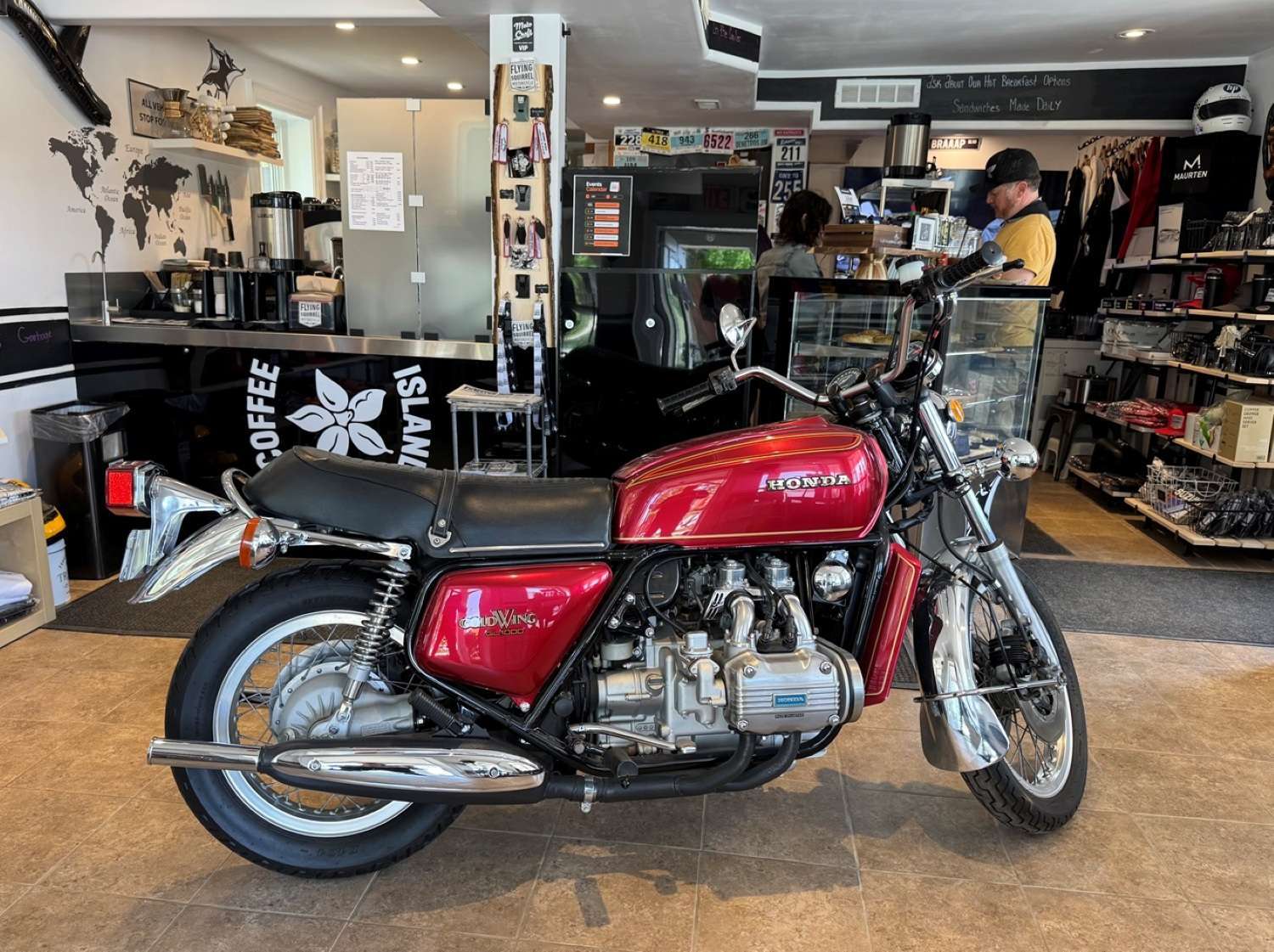
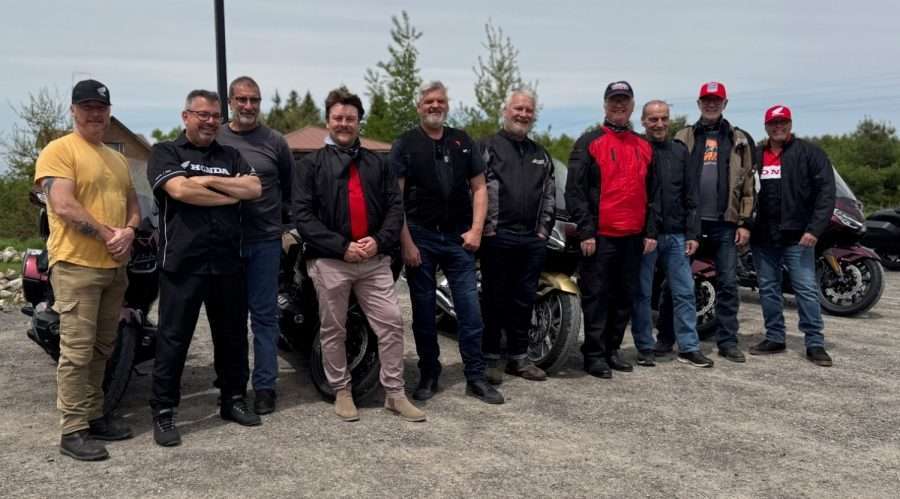
Recently, Honda Canada invited Canadian moto journalists to their head office north of Toronto for a special event celebrating the 50th anniversary of their iconic touring machine, the Gold Wing. Such events are the rare times when the bike riding, writing and shooting community convenes, and Honda’s late May event was the first in-person gathering for many of these scribes since the COVID period.
Most of the current categories of motorcycle available at your local dealer didn’t exist when the Gold Wing came on the scene in 1975. If there was a touring division 50 years ago, it belonged to BMW – their long-established flat twin was solid and reliable for high mileage and came with shaft drive – a feature that at one point might define the touring category.
At this time, Honda had pulled out of racing (after an incredible 1967 season that featured all kinds of highlights, including Mike Hailwood riding their legendary six cylinder at Canadian Tire Motorsport Park in our sole MotoGP race as part of Canada’s Centennial celebrations) to focus on car racing development (F1) and a segment defining small auto – a car that would turn out to be the Civic.

But one of the projects soaking up resources was an all-new motorcycle design that turned out to be the Gold Wing. In this era, many people toured on big street machines, and Honda had that market mostly covered with their four-cylinder CB750. As with the BMWs of the day, you would figure out your own fairing and luggage set-ups (hose clamps, anyone?) and build your own custom tourer.
The first Gold Wing was centred on a very car-type engine, but not anything like what Honda offered for other categories of transportation. To help lower the weight and centre of gravity, a flat configuration four-cylinder engine was designed, with liquid cooling -although Honda generally preferred air-cooled at the time.
The most famous engines of similar boxer configuration at the time was from Porsche and Volkswagen, and air-cooled – and BMW’s fundamental twin was also a flat design.
The engine was ultra torquey, with a smooth and powerful mid-range that made down shifting generally unnecessary. Smooth and auto reliable, there was really nothing like the high tech and surprisingly easy to ride initial Gold Wing.
Shaft drive was used for final drive, so chain wear and adjustment would not be a concern over long trips. Setting an important design trend that would eventually be key in the pending world of sport bikes, the fuel tank was low and centrally mounted, basically under the rider’s bum.
Some items on the 1975 Gold Wing seem quaint now, including twin rear shocks, spoked wheels and high standard bars in the Universal Japanese Motorcycle mold.
Offered in most markets worldwide, the Gold Wing found its natural home as Honda expected – across the United States. The initial GL1000 was available in a basic blue and a “look at me” brighter offering my friends and I called the “yellow whale.” This machine was updated in 1978, with a focus on moving the torque lower in the power band – this was accomplished with revised cam timing and new, smaller carbs. (No FI – yet – although the engine configuration was perfect for that long-expected update).
I rode a Gold Wing for the first time in the late 1970s, and as many riders have noticed since, the bike was not much like what my proto-sport bike friends and I imagined. The bike didn’t feel big, the weight was low and the engine was nothing like other two-wheeled powerplants. Also, the chassis and suspension were surprisingly stiff, so the Gold Wing could be handled with a little gusto – once you got over the shock!
By the end of the second generation GL1100’s run in 1982, weight had dropped, power was up, and the chassis was longer to provide more room for rider and especially passenger. Some touring features were available, including saddle bags and a tail trunk.
The third generation GL1200 arrived in 1984 and was perhaps the first offering that would seem familiar to current Gold Wing fans. The engine was repositioned, the frame was new and stiffer, wheels were smaller, and air suspension was available. These updates built on other recently introduced features, including the “under the radar” linked or unified braking and Torque Reactive Anti-Dive Controlled braking system – TRAC. (I am a fan of linked braking in almost all applications).
Most importantly, a fully “decked” version was available, with integrated faring and luggage, killing a vast portion of the motorcycle aftermarket in no time at all. By 1982 there was an Aspencade version, named after a famous touring rally, with two-toned paint and a host of luxury, comfort-oriented features. By 1985 the naked version of the Gold Wing was no longer offered.
By now, the bike was built in a new plant in Marysville, Ohio, neatly side-stepping tariff issues that had everyone’s attention at the time (sound familiar?). The next major update was a big one – 1988 got a flat six-cylinder boxer engine, and the Generation five GL would be a solid performer with minor changes for 17 years.
The genesis of the Gold Wing we have now came from a three-year design study to update the platform, and this was the focus of the 2001 GL1800, featuring a stiffer extruded-spar twin aluminum beam chassis, fuel-injection and ABS braking. In 2006, in-dash GPS arrived, and the much-loved heated grips and seat. An airbag was also an option.
These features were much enjoyed during a memorable ride to the Grand Canyon in late 2005, with a Honda staffer sitting behind me and texting much of the way – both rider and passenger enjoying the latest technological developments!
In 2011 no new Gold Wings were produced, a result of the economic downturn of late 2008 that seriously affected the bike business. The Gold Wing was back in 2012, now built in Japan as the US plants started to focus on ATVs. The advent of the sporting tourer was recognized in 2013 by Honda with the arrival of the F6B, a lightweight version without top box storage.
2018’s G6 Gold Wing update featured four-valves per cylinder for the first time, with Honda now suggesting the engine made 125 horsepower with 125 pounds of peak torque at 4,500 revs. In operation, the power was somewhat soaked up by the bike’s bulk, but you certainly noticed and appreciated the abundant mid-range! On a Dynojet rear-wheel Dyno, power was now measured at around 100, but that was never really the point.
By now the traditional telescopic fork was replaced by a girder design, allowing for a more forward engine position that also keeps the rider closer to the front of the bike and their handlebars.
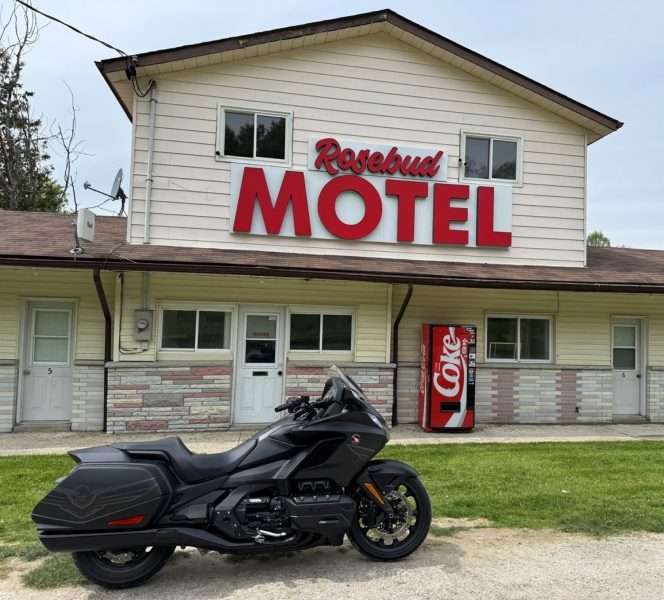
A major tech advancement happened with the advent of the dual-clutch (DCT) transmission, a seven speed with overdrive design that should not be confused with an automobile type automatic.
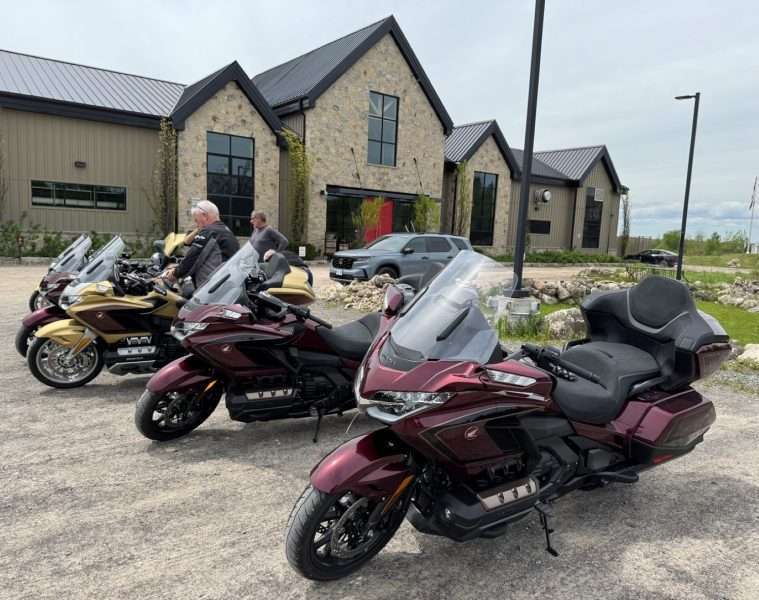
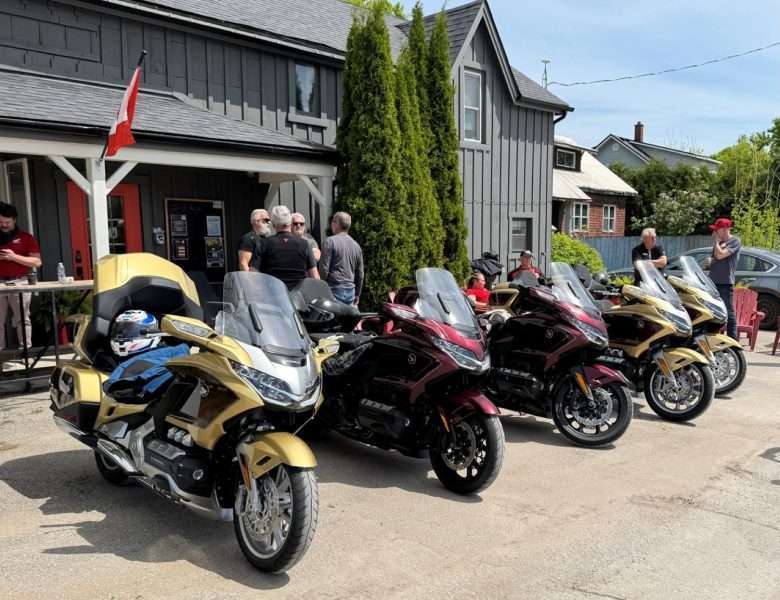
During Honda’s recent Gold Wing event in central Ontario, I focused my time on a two-tone Anniversary Edition and riding in Sports mode using the DCT, sometime with my left-hand operated the manual over-ride shifting. It is fun to pilot the current GL this way, and on winding roads you can really enjoy the stiff chassis and flexible powerplant. There is nothing like the Gold Wing in our motorcycling world.